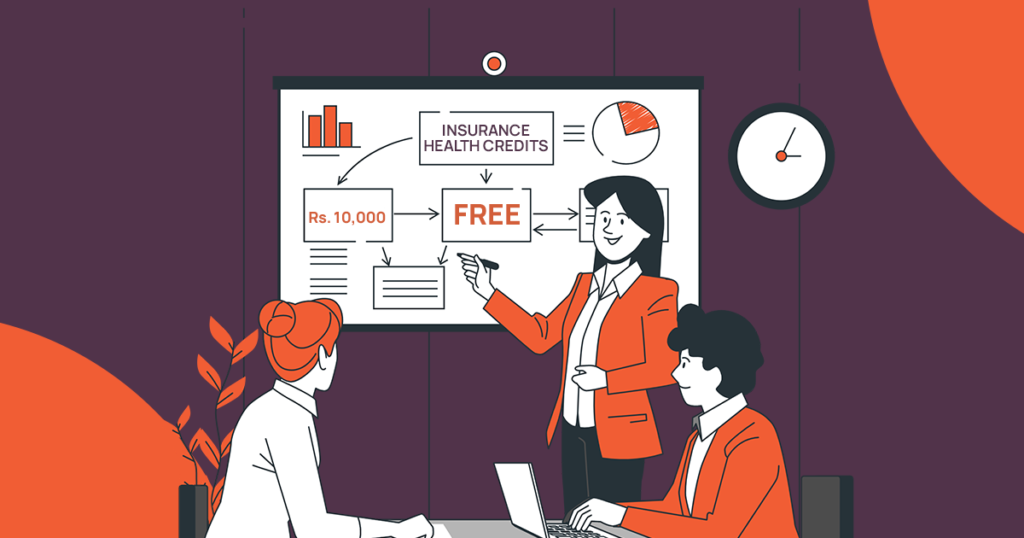
Employees are no longer evaluating job opportunities based on salary alone. Healthcare coverage, financial security, family protection, workplace flexibility and employee wellness are increasingly important considerations when choosing an employer.
For businesses in Pakistan, this creates an important challenge: how do you design an employee benefits programme that attracts talented people, supports existing employees and remains financially sustainable?
A well-designed employee benefits programme can help businesses improve employee satisfaction, strengthen retention, reduce financial stress and build a healthier, more productive workforce.
However, employee benefits are not limited to health insurance or annual bonuses. They include a combination of legally required entitlements, financial benefits, healthcare coverage, wellness initiatives and additional perks that improve the overall employee experience.
This guide explains everything HR professionals and business leaders in Pakistan need to know about employee benefits in 2027, including mandatory benefits, group health insurance, OPD coverage, provident funds, employee wellness, budgeting and how to build a competitive benefits strategy.
1. What Are Employee Benefits?
Employee benefits are additional forms of compensation, financial protection, services and workplace support provided by an employer alongside an employee’s basic salary.
They can be divided into two broad categories:
Statutory benefits: These are benefits and protections required under applicable employment and labour laws.
Voluntary employee benefits: These are additional benefits employers choose to offer to improve employee well-being, attract talent and create a competitive workplace.
Examples include:
- Group health and life insurance.
- Outpatient Department (OPD) coverage.
- Parents’ health insurance.
- Provident funds and retirement benefits.
- Paid annual and sick leave.
- Maternity benefits.
- Employee wellness programmes.
- Telehealth and digital healthcare services.
- Performance bonuses and allowances.
- Learning and professional development opportunities.
The combination of benefits offered depends on the company’s size, industry, budget, workforce requirements and applicable laws.
2. Why Are Employee Benefits Important for Businesses in Pakistan?
Employee benefits are not simply an HR expense. They are an investment in the people responsible for running and growing a business.
Here are six reasons why companies should prioritise employee benefits in 2027.
A. Attract and Retain Talented Employees
Competition for skilled professionals is increasing across Pakistan’s technology, financial services, manufacturing, healthcare and professional services sectors.
Candidates often compare employment opportunities based on the complete compensation package rather than salary alone.
Companies offering health insurance, retirement savings, family coverage and wellness benefits can create a stronger employment proposition.
A competitive benefits programme can also help reduce employee turnover and the associated costs of recruitment, onboarding and training.
B. Improve Employee Satisfaction
Financial uncertainty, healthcare expenses and family responsibilities can create significant stress for employees.
Benefits such as medical coverage, OPD services and financial protection can help employees feel more secure.
When employees understand and value the benefits available to them, they are more likely to appreciate the overall employment experience.
C. Support Employee Health and Productivity
Health-related problems can affect attendance, concentration and workplace performance.
Providing access to healthcare services, preventive check-ups and timely medical consultations can help employees address health concerns.
A comprehensive benefits programme should support employees beyond hospitalisation and provide access to routine healthcare as well.
D. Improve Employee Engagement
Employees are more likely to feel valued when their employer invests in their well-being.
Benefits that support employees and their families can strengthen the relationship between the organisation and its workforce.
E. Build a Competitive Employer Brand
Employee benefits can differentiate a company in a competitive recruitment market.
A business offering meaningful healthcare, retirement and wellness benefits may be more attractive to prospective employees than an employer offering salary alone.
F. Support Financial Security
Unexpected medical expenses, retirement planning and family responsibilities can place pressure on household finances.
Health insurance, provident funds and other financial benefits help employees manage some of these risks.
3. Mandatory Employee Benefits in Pakistan: What Employers Need to Know
Before introducing additional employee benefits, HR professionals must understand their legal obligations.
Pakistan’s employment and labour framework includes federal and provincial legislation. Requirements may vary according to the province, industry, establishment size, employee classification and applicable exemptions.
The following are important areas employers should review.
1. Employees’ Old-Age Benefits Institution (EOBI)
EOBI is a social insurance programme designed to provide retirement-related benefits to eligible insured employees.
Depending on eligibility and applicable rules, benefits include:
- Old-age pension.
- Invalidity pension.
- Survivors’ pension.
- Old-age grant.
The Ministry of Overseas Pakistanis and Human Resource Development identifies establishments with ten or more employees as subject to mandatory EOBI registration under its published guidance.
The published contribution framework specifies a contribution of 6% of the notified minimum wage, comprising 5% from the employer and 1% from the employee, subject to applicable rules and wage calculations.
Employers should verify current contribution rates, wage ceilings, registration requirements and eligibility directly with EOBI before processing payroll.
2. Provincial Employees’ Social Security
Employees’ social security schemes provide eligible workers with protection against certain employment-related and health-related risks.
These schemes operate through provincial institutions, including:
- Sindh Employees’ Social Security Institution (SESSI).
- Punjab Employees Social Security Institution (PESSI).
- Relevant social security institutions in other provinces.
Depending on eligibility and applicable legislation, social security benefits may include medical care, sickness benefits, maternity benefits, employment injury benefits and other forms of financial assistance.
Employers should verify the applicable registration and contribution requirements for their location and workforce.
3. Gratuity and Provident Fund
Gratuity and provident funds are important components of employee financial security.
Gratuity: A lump-sum payment that may become payable to an eligible employee upon termination or retirement, depending on the applicable legislation and employment conditions.
Provident fund: A retirement savings arrangement in which employer and employee contributions accumulate over time.
In certain legal frameworks, a qualifying provident fund may operate in place of gratuity for the relevant period if statutory conditions are satisfied.
For example, the Punjab Labour Code 2026 introduced provisions addressing gratuity and provident funds. Employers operating in Punjab should review the Code’s applicability and transition provisions.
HR teams should not assume that every employee is covered by identical rules. The applicable law, establishment threshold, employee classification and fund arrangements must be checked.
4. Maternity Benefits
Maternity protection is another important area of employment compliance.
Applicable legislation provides eligible female employees with maternity-related entitlements, subject to the relevant law and conditions.
For example, Sindh has its Sindh Maternity Benefits Act 2018, while other jurisdictions have their own applicable legal frameworks.
Employers should ensure that their maternity policies comply with the legislation applicable to their workplace.
5. Paid Leave and Working Conditions
Employers must also consider statutory requirements relating to:
- Annual leave.
- Casual leave.
- Sick leave.
- Public holidays.
- Working hours.
- Weekly rest days.
- Employment termination and notice requirements.
The applicable entitlements may differ according to provincial legislation, establishment type and employee category.
Important for HR: This section is a general overview, not a legal compliance checklist. Before finalising employment policies for 2027, consult qualified labour counsel and verify the latest federal and provincial requirements.
4. Types of Employee Benefits Companies Should Offer in 2027
Meeting statutory requirements is only the starting point.
Companies that want to build a competitive employment proposition should consider additional benefits that address the financial, physical and personal well-being of their employees.
Here are the major categories.
A. Group Health Insurance
Group health insurance is one of the most valuable employee benefits companies can offer.
It provides eligible employees with financial protection against covered medical expenses arising from illness, accidents and hospitalisation.
Depending on the policy, group health insurance can include:
Hospitalisation coverage
- Inpatient hospitalisation.
- Surgical procedures.
- ICU expenses.
- Emergency medical treatment.
- Pre- and post-hospitalisation expenses, where covered.
- Ambulance services, where included.
Family health coverage
Companies may also extend health insurance to eligible family members, including:
- Spouses.
- Children.
- Dependent family members.
- Parents, where a suitable plan is available.
Offering family health coverage can make an employee benefits programme more meaningful because employees are often concerned about the healthcare needs of their dependants.
When selecting group health insurance, HR teams should evaluate coverage limits, hospital networks, room entitlements, exclusions, waiting periods, claim procedures and insurer service quality.
B. OPD (Outpatient Department) Benefits
Hospitalisation insurance is important, but it does not necessarily address employees’ everyday healthcare needs.
Doctor consultations, medicines, laboratory tests and routine medical visits can create recurring out-of-pocket expenses.
This is where OPD benefits become valuable.
An OPD programme can provide access to services such as:
- General practitioner consultations.
- Specialist consultations.
- Prescription medicines.
- Diagnostic and laboratory tests.
- Routine medical consultations.
Depending on the arrangement, employees may access these services through a defined annual limit, an approved healthcare network or a digital platform.
Why should HR consider OPD?
Because healthcare is not limited to hospital admissions. Employees regularly need consultations, medicines and diagnostic services.
Combining hospitalization insurance with OPD benefits can create a more complete employee healthcare programme.
C. Parents’ Health Insurance
One of the biggest healthcare concerns for many working professionals in Pakistan is the medical well-being of their ageing parents.
Employees may have employer-provided health insurance for themselves and their immediate family, but their parents are often excluded.
This creates an opportunity for employers to introduce parents’ health insurance as an additional benefit.
Depending on the insurer and policy, parents’ coverage may include:
- Hospitalisation.
- Medical emergencies.
- Surgical procedures.
- ICU expenses.
- Ambulance services.
- Applicable pre- and post-hospitalisation benefits.
Some insurance plans offer coverage for parents up to age 75, subject to eligibility, underwriting and policy conditions.
For employers, this benefit can help differentiate their compensation package and address a meaningful concern among employees.
D. Group Life Insurance
Group life insurance provides financial protection to an employee’s nominated beneficiaries in the event of death during the insured period.
Depending on the policy, it may also include accidental death and disability benefits.
Benefits can include:
- Basic life coverage.
- Accidental death coverage.
- Permanent disability benefits.
- Additional protection through optional riders.
Group life insurance can help employees feel more financially secure, knowing that their families may receive financial assistance if an unfortunate event occurs.
E. Provident Fund and Retirement Benefits
Retirement planning is an important part of long-term employee financial security.
Companies can support employees through:
- Employer and employee provident fund contributions.
- Gratuity arrangements where applicable.
- Retirement planning education.
- Financial literacy programmes.
A well-structured retirement benefit helps employees build savings over the course of their employment.
HR teams should ensure that the arrangement meets the applicable legal, trust and tax requirements.
F. Employee Wellness Benefits
Employee wellness is broader than medical insurance.
It includes initiatives that support employees’ physical, mental and emotional well-being.
Examples include:
- Mental health awareness.
- Counselling services.
- Preventive health screenings.
- Fitness and exercise programmes.
- Nutrition guidance.
- Stress management workshops.
- Health awareness campaigns.
Wellness initiatives can help create a healthier workplace culture when they are supported by leadership and designed around employees’ actual needs.
G. Telehealth and Digital Healthcare
Digital healthcare is making medical services more accessible.
Telehealth allows employees to consult healthcare professionals remotely, reducing the need for unnecessary travel and making basic medical guidance more convenient.
Employers can consider digital healthcare services such as:
- Online doctor consultations.
- Digital prescriptions.
- Virtual medical assistance.
- Health information and education.
- Access to medical support through mobile applications.
For employees working remotely or living outside major cities, digital healthcare can be particularly useful.
H. Additional Employee Perks
Companies can also introduce non-medical benefits to improve the employee experience.
Examples include:
- Performance bonuses.
- Transport allowances.
- Meal allowances.
- Mobile and internet allowances.
- Flexible working arrangements.
- Paid parental leave beyond statutory entitlements.
- Professional development budgets.
- Training and certification support.
- Employee discounts.
- Recognition and rewards programmes.
The right combination depends on the company’s workforce and financial capacity.
5. Traditional vs Modern Employee Benefits: What Is Changing in 2027?
Employee benefits are evolving.
Traditionally, many Pakistani employers focused primarily on salary, annual bonuses, basic medical coverage and retirement contributions.
However, modern employee expectations are broader.
| Traditional benefits | Modern benefits |
|---|---|
| Basic hospitalisation insurance | Hospitalisation + OPD coverage |
| Employee-only medical coverage | Employee and family coverage |
| Paper-based medical cards | Digital and virtual health cards |
| Physical doctor visits | Telehealth and online consultations |
| Limited healthcare access | Medicine delivery and diagnostic networks |
| Basic life insurance | Comprehensive financial protection |
| Fixed working arrangements | Flexible and hybrid work options |
| Annual performance reviews | Continuous employee feedback |
| Basic retirement benefits | Financial wellness and retirement education |
This does not mean traditional benefits are no longer relevant.
Rather, employers should build on existing benefits and introduce services that address employees’ changing expectations.
6. How to Design an Employee Benefits Programme for Your Company
A successful employee benefits programme should not be created by simply copying what another company offers.
It should be designed around your workforce, organisational goals and available budget.
Here is a practical framework for HR teams.
Step 1: Understand Your Employees’ Needs
Start by identifying what employees actually value.
Conduct employee surveys, feedback sessions or internal assessments.
Consider questions such as:
- Do employees have adequate medical coverage?
- Are their spouses and children covered?
- Would they value parents’ health insurance?
- Do they need OPD benefits?
- Are retirement benefits sufficient?
- Which wellness services would they use?
Do not assume that management’s preferred benefits are necessarily the benefits employees value most.
Step 2: Review Your Existing Benefits
Prepare a complete inventory of existing employee benefits.
Evaluate:
- Current health insurance coverage.
- Life insurance arrangements.
- OPD facilities.
- Provident fund contributions.
- Gratuity arrangements.
- Paid leave policies.
- Wellness initiatives.
- Other allowances and perks.
Identify gaps, duplication and underutilised benefits.
Step 3: Define Your Benefits Budget
Determine how much your organisation can allocate to employee benefits.
Your budget should consider:
- Number of employees.
- Average employee age.
- Family coverage requirements.
- Medical insurance limits.
- OPD requirements.
- Life insurance coverage.
- Retirement contributions.
- Additional wellness services.
It is useful to distinguish between fixed statutory obligations and discretionary benefits that can be adjusted according to business priorities.
Step 4: Prioritise High-Value Benefits
If your budget is limited, start with benefits that address significant employee needs.
For many organisations, a practical starting point could include:
- Compliance with applicable statutory benefits.
- Group health insurance.
- Group life insurance.
- OPD coverage, where affordable.
- Retirement and savings benefits.
- Additional family coverage and wellness services.
You can expand the programme as the company grows.
Step 5: Select the Right Insurance and Service Providers
If you are introducing health or life insurance, compare providers carefully.
Evaluate:
- Coverage limits.
- Premiums.
- Hospital networks.
- Claim settlement processes.
- Customer support.
- Digital services.
- Policy exclusions.
- Renewal terms.
- Employee experience.
Do not select a provider based on premium alone. Service quality and claims support are equally important.
Step 6: Communicate Benefits Clearly
Employees cannot appreciate benefits they do not understand.
Create a clear employee benefits guide explaining:
- Available benefits.
- Eligibility requirements.
- Coverage limits.
- How to access services.
- How to submit claims.
- Important exclusions.
- Contact information for support.
Consider onboarding sessions and periodic awareness campaigns.
Step 7: Review the Programme Annually
Employee needs, insurance premiums and business priorities change over time.
Conduct an annual review to evaluate performance, utilisation, employee feedback and costs.
Use these insights to improve your benefits programme for the following year.
7. How Much Should Companies in Pakistan Spend on Employee Benefits?
There is no universal employee benefits budget that works for every business.
The right allocation depends on the company’s size, industry, employee demographics, compensation structure and financial capacity.
Instead of adopting an arbitrary percentage, HR and finance teams should build their budgets around actual requirements.
Consider the following framework:
| Benefit category | Budget consideration |
|---|---|
| Statutory contributions | Calculate according to applicable laws |
| Group health insurance | Employee count, age, coverage and family inclusion |
| OPD benefits | Expected utilisation and annual limits |
| Group life insurance | Salary multiples and insured benefits |
| Provident fund | Applicable contribution structure |
| Wellness initiatives | Programme type and participation |
| Additional perks | Employee preferences and business priorities |
Example: Building a benefits budget
Imagine a company with 100 employees.
Its HR team wants to introduce a benefits programme covering:
- Group health insurance.
- OPD services.
- Group life insurance.
- Provident fund.
- Employee wellness.
The HR and finance teams should obtain quotations, estimate annual contributions, review employee eligibility and calculate the total cost per employee.
A useful budgeting metric is:
Annual Employee Benefits Cost per Employee = Total Annual Employee Benefits Cost ÷ Average Number of Eligible Employees
This makes it easier to compare costs across departments, business units and financial years.
HR teams should also monitor annual premium increases, claims experience and utilisation before renewing insurance policies.
8. How to Measure the ROI of Employee Benefits
Employee benefits should be evaluated not only by how much they cost but also by the value they deliver.
Although some benefits are difficult to measure financially, HR teams can track several indicators.
1. Employee Retention Rate
Measure the percentage of employees who remain with the organisation over a given period.
Compare retention before and after introducing or improving benefits.
2. Employee Turnover Rate
Track voluntary employee departures and analyse whether benefits-related concerns contribute to resignations.
3. Employee Satisfaction
Conduct regular employee surveys to understand satisfaction with:
- Medical coverage.
- OPD benefits.
- Family coverage.
- Retirement benefits.
- Wellness services.
4. Benefits Utilisation
Track how many employees actually use the benefits offered.
For example:
- Number of employees using health insurance.
- OPD consultation frequency.
- Telehealth usage.
- Preventive health screening participation.
- Employee app engagement.
Low utilisation may indicate that employees are unaware of available benefits or that the services are not convenient.
5. Absenteeism
Monitor employee absence trends and evaluate whether healthcare access and wellness programmes are helping address preventable workplace health challenges.
6. Recruitment Effectiveness
Track whether improvements in benefits contribute to better candidate acceptance rates and recruitment outcomes.
Important: Avoid assuming that every improvement in retention or productivity is caused by employee benefits alone. Consider other factors such as compensation, management, working conditions and career development.
9. Employee Benefits for Different Types of Businesses
Not every organisation needs the same benefits programme.
The ideal structure depends on the company’s workforce and business model.
Startups and Small Businesses
Startups often operate with limited HR budgets and need to prioritise essential benefits.
A practical starting package could include:
- Group health insurance.
- Group life insurance.
- Statutory retirement and social security arrangements, where applicable.
- Basic wellness initiatives.
- Flexible working arrangements.
As the business grows, it can introduce OPD coverage, family medical benefits and additional perks.
SMEs
Small and medium-sized enterprises need to balance affordability with employee expectations.
A competitive package may include:
- Group health insurance.
- OPD coverage.
- Provident fund arrangements.
- Group life insurance.
- Employee wellness initiatives.
Group insurance arrangements can help SMEs provide structured coverage to employees without individually arranging policies for each person.
Large Enterprises
Larger organisations generally have more diverse employee needs and may require a comprehensive benefits structure.
This could include:
- Higher medical coverage limits.
- Family and parents’ insurance.
- OPD and diagnostic services.
- Group life insurance.
- Provident fund and retirement benefits.
- Mental health and wellness programmes.
- Digital healthcare platforms.
- Flexible and additional employee perks.
Large employers should also evaluate benefits utilisation across different departments, locations and employee categories.
Technology and IT Companies
Technology companies often compete for highly skilled employees.
A modern benefits package can include:
- Comprehensive medical coverage.
- OPD services.
- Parents’ health insurance.
- Mental wellness programmes.
- Telehealth.
- Flexible working.
- Professional development.
- Digital employee benefits platforms.
These benefits can strengthen the employer value proposition in a competitive talent market.
10. The Role of Technology in Employee Benefits Management
Managing employee benefits manually can become complicated as an organisation grows.
HR teams may need to coordinate employee enrolments, insurance documentation, claims, policy renewals, eligibility records and employee queries.
Technology can simplify these processes.
A digital employee benefits platform can help HR teams:
Manage Employee Benefits
Maintain employee information, eligibility and benefits records through a centralised system.
Provide Digital Health Cards
Give employees convenient access to their health insurance details through virtual cards or mobile applications.
Simplify Claims Management
Enable employees to access claim-related information and submit requests through digital channels, depending on the service provider.
Improve Healthcare Access
Provide access to telehealth, medical consultations, medicines and diagnostic services through connected healthcare networks.
Give HR Teams Better Visibility
A centralised HR portal can help administrators monitor employee coverage, manage enrolments and access relevant benefits information.
Improve Employee Communication
Mobile applications, notifications and digital support channels can help employees understand and access their benefits.
For HR departments, the goal is to reduce administrative complexity while improving the employee experience.
11. Employee Benefits Trends to Watch in Pakistan in 2027
The employee benefits landscape is likely to continue evolving as businesses respond to changing employee expectations, healthcare costs and workforce dynamics.
Here are seven areas HR leaders should pay attention to.
1. More Comprehensive Healthcare Coverage
Employers may increasingly look beyond basic hospitalisation coverage and explore OPD, diagnostics, medicine access and preventive healthcare.
2. Greater Focus on Family Benefits
Family health coverage, including parents’ insurance, can become an important differentiator for employers seeking to support employees’ household responsibilities.
3. Digital-First Healthcare
Mobile health cards, telehealth, online consultations and digital claims services can make healthcare more accessible.
4. Preventive Healthcare and Wellness
Employers can place greater emphasis on preventive screenings, health education and employee wellness initiatives.
5. Personalised Benefits
Different employee groups have different priorities.
Younger professionals may value learning and flexibility, while employees with families may prioritise medical and family protection.
Employers can explore more flexible benefits structures while maintaining fairness and transparency.
6. Better Benefits Analytics
HR leaders can use utilisation data, employee feedback and cost analysis to understand which benefits deliver value.
7. Greater Attention to Employee Financial Well-being
Retirement planning, savings education and financial literacy can become important parts of employee well-being programmes.
These are strategic opportunities rather than guaranteed market-wide trends. Companies should validate their employees’ needs before introducing new benefits.
12. The 2027 Employee Benefits Checklist for HR Professionals
Use this checklist when reviewing or designing your organisation’s employee benefits programme.
Legal and Compliance
- Review applicable federal and provincial labour laws.
- Verify EOBI registration and contribution requirements.
- Review provincial social security obligations.
- Ensure applicable gratuity or provident fund arrangements are compliant.
- Review maternity and leave policies.
- Update employment policies where necessary.
Healthcare and Insurance
- Review group health insurance coverage.
- Evaluate hospital network availability.
- Review medical coverage limits.
- Assess OPD coverage requirements.
- Explore parents’ health insurance.
- Review group life insurance.
- Check emergency and claims support services.
Employee Wellness
- Assess employee wellness requirements.
- Consider telehealth services.
- Explore preventive healthcare initiatives.
- Review mental wellness support.
- Introduce employee health awareness programmes.
Benefits Administration
- Prepare an updated employee benefits handbook.
- Review the benefits budget.
- Compare insurance providers.
- Evaluate digital benefits management options.
- Communicate benefits to employees.
- Track employee satisfaction and utilisation.
- Schedule an annual benefits review.
A structured review can help HR teams identify gaps and create a more effective employee benefits programme.
Conclusion: Build an Employee Benefits Programme That Goes Beyond Salary
Employee benefits are becoming an important part of how companies attract, retain and support their workforce.
For Pakistani businesses, 2027 is an opportunity to move beyond traditional compensation packages and build a more comprehensive approach to employee well-being.
A strong benefits programme should combine statutory compliance, healthcare protection, financial security, family coverage and wellness initiatives.
It should also be affordable for the business, relevant to employees and simple for HR teams to administer.
Most importantly, employee benefits should not be treated as a collection of policies or perks. They should be part of a broader strategy to create a healthier, more secure and more productive workplace.
Build a Better Employee Benefits Programme with SmartBenefits
Managing employee benefits doesn’t have to be complicated.
SmartBenefits helps businesses provide digital-first health, wealth and wellness benefits through solutions designed for modern workplaces.
With solutions including:
- Group Health Insurance: Hospitalisation and medical coverage for employees and eligible dependants.
- Parents’ Health Insurance: Additional healthcare protection for employees’ parents, subject to policy eligibility.
- OPD Services: Access to doctor consultations, medicines and diagnostic services.
- Group Life Insurance: Financial protection for employees and their families.
- Digital Health Cards: Convenient access to employee health coverage.
- Telehealth: Access to virtual medical consultations.
- Cashless Medicine Delivery: Convenient access to eligible medicine delivery services.
- Discounted Lab Tests: Access to diagnostic services through available healthcare partners.
- HR Portal and Mobile App: Digital tools to help manage and access employee benefits.
Whether you are a startup, SME or established enterprise, SmartBenefits can help you explore an employee benefits programme aligned with your workforce and business requirements.
Give your employees more than a salary. Give them benefits that support their health, financial security and well-being.
Visit SmartBenefits.pk to explore employee benefits solutions for your organisation.
Disclaimer: This article provides general information and is not legal, tax or financial advice. Employee entitlements and employer obligations depend on applicable federal and provincial legislation, establishment type, workforce classification and other conditions. Employers should obtain professional advice and verify current laws and regulations before implementing or changing employee policies.